
Warranty, Repair, and Return Terms for Overseas Brand Products From Official Stores, Outlets, and Parallel Import Sellers
A product can be genuine and still be difficult to repair in Korea.
That distinction matters when comparing an overseas brand’s official store, manufacturer outlet, authorized retailer, and parallel import seller. The hardware may carry the same logo and model family, but the company responsible for the warranty, the place where a repair can be accepted, and the cost of returning a faulty product can be completely different.
The safest comparison begins before purchase. Record the exact model number, product condition, seller’s legal entity, warranty issuer, service location, return period, and whether the Korean service center accepts that regional model. Do not treat phrases such as “one-year warranty,” “international warranty,” or “domestic A/S available” as sufficient without identifying who actually provides the service.
Warranty Issuers and Service Reception by Sales Channel
The first question is not whether a warranty exists. It is who is legally responsible for it.
A product purchased from a manufacturer’s Korean direct store will normally be covered according to the manufacturer’s Korean sales and warranty terms. The same assumption should not automatically be applied to a product carrying the same brand but sold through an overseas retailer or parallel importer.
Sony Korea provides a clear example. Its professional-product warranty states that its Korean warranty applies to new products sold in Korea through Sony Korea or an authorized dealer. It also requires the original sales receipt as proof of purchase for warranty eligibility. Products not sold through Sony Korea are excluded from that specific domestic warranty unless another document or agreement provides otherwise.
Samsung demonstrates why “international warranty” also needs a product-level check. Samsung Korea currently provides an international warranty program for eligible Note PCs bought outside the original purchase country, with one year of service in listed regions. Samsung’s general Korean warranty guidance separately states that overseas smartphones, tablets, and wearables may receive service after repair availability is confirmed, but parts shortages can lengthen the process and some products may ultimately require service in the country of original sale.
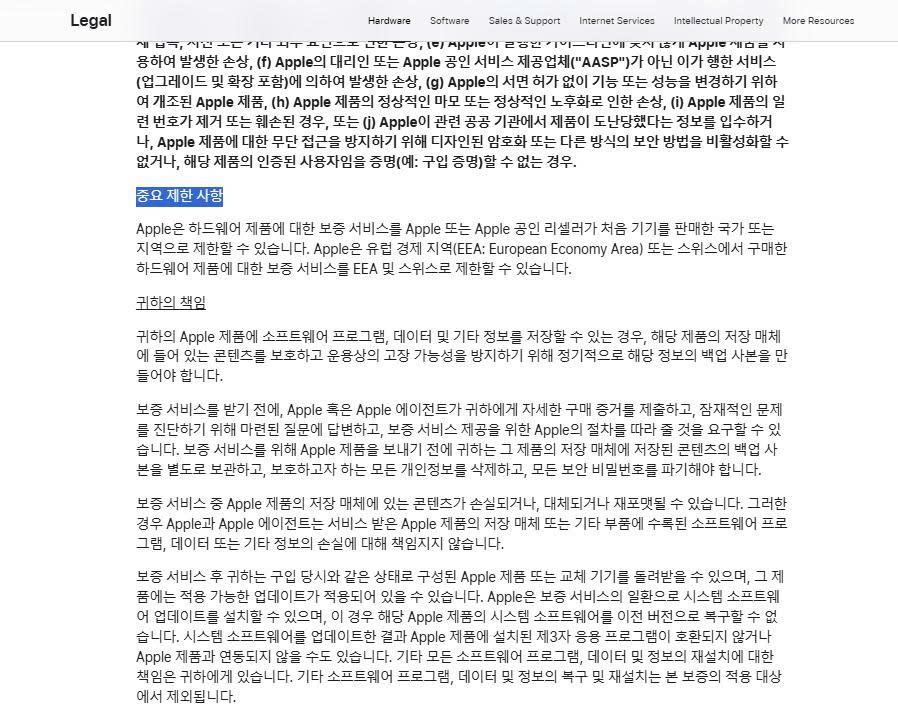
Apple’s warranty terms also allow Apple to restrict hardware warranty service to the country or region where Apple or its authorized distributor originally sold the product. Apple may additionally require proof-of-purchase information before providing warranty service.
These examples show why the purchase channel should be recorded in a more precise way:
| Purchase route | Warranty information to record |
|---|---|
| Manufacturer direct store | Local manufacturer entity, warranty term, official service-center route |
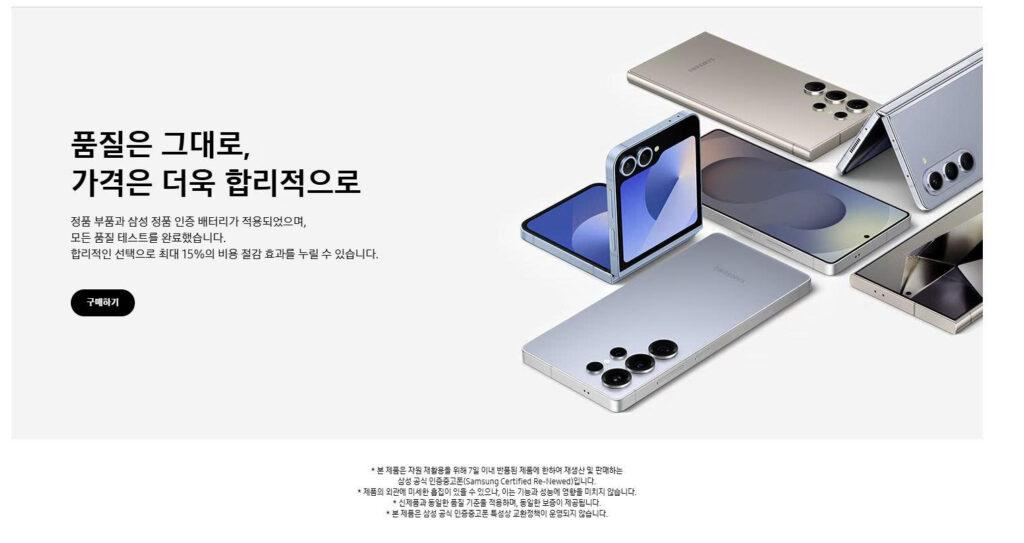
| Manufacturer-certified outlet | Brand warranty plus exact refurbished or outlet condition |
| Authorized retailer | Manufacturer warranty eligibility and proof-of-purchase requirements |
| Parallel import seller | Seller warranty, manufacturer service eligibility, repair destination |
| Overseas direct purchase | Original-country warranty plus Korean paid or warranty repair availability |
A seller writing “12-month A/S” may simply mean that the seller promises to receive the product for twelve months. That is not the same thing as a manufacturer promising twelve months of service at its Korean authorized centers.
Outlet Condition Codes and Warranty Exceptions
“Outlet” describes a sales channel, not one standardized product condition.
An outlet can contain certified refurbished products, discontinued inventory, returned products, products with damaged packaging, demonstration units, or items with disclosed cosmetic defects. The condition attached to the individual unit therefore matters more than the word “outlet.”
Apple’s Korean Certified Refurbished store is an example of a clearly defined manufacturer program. Apple states that its certified refurbished products undergo functional testing, are cleaned and inspected, use genuine Apple replacement parts when required, and receive Apple’s standard one-year limited warranty. Refurbished iOS devices receive a new battery and outer shell.
That should not be generalized to an ordinary display product or an open-box product sold by another retailer.
Before buying an outlet unit, identify the seller’s condition code and save its definition. Useful categories to separate include:
Certified refurbished
Manufacturer or identified refurbishment program with stated inspection and warranty standards.
Display unit
A product previously used for demonstration, potentially with long operating hours or repeated handling.
Discontinued inventory
A new or unused model that is no longer part of the current lineup.
Cosmetic-defect item
A functional product sold with scratches, dents, damaged packaging, or another disclosed external defect.
Customer return or open-box product
Packaging was opened or the unit was returned, but its actual use and inspection history must still be confirmed.
The receipt should identify the condition whenever possible.
If a laptop was sold as a display product with a scratch on the lid, a receipt or order page documenting that scratch helps separate a pre-existing condition from damage discovered later. If the invoice simply says “Laptop Model X” with no mention of outlet status, proving which defects existed at the time of sale can become more difficult during a later dispute.
Save the product page before ordering, particularly the condition description, serial number if shown, included accessories, battery claim, warranty language, and photographs of the actual unit.
Parallel-Import Repair Routes and Cross-Border Cost
Parallel imports require a model-number check before a price comparison.
Do not ask only:
“Does this brand have service centers in Korea?”
Ask:
“Will the Korean service center repair model ABC-1234 imported from this specific country, and will the repair be free or paid?”
Sony Korea gives a useful real-world example. Its current service guidance says that a parallel-import Sony product can be repaired in Korea only when it is the same product as one officially imported by Sony Korea. If the model has never been officially imported into Korea, Sony says repair may be unavailable because it lacks the necessary product information. Sony also states that paid repair charges for qualifying parallel-import products can be approximately twice the applicable standard repair charge.
Samsung’s policy is different. For overseas smartphones, tablets, and wearables, Samsung Korea says service availability must first be confirmed. An overseas model may receive warranty service for one year when service is possible, but parts acquisition can delay repair, repair pricing may differ by country, and some devices may need service in their original sales country.
Apple likewise warns that service can be territorially restricted and that, where international service is available, cross-border service can involve import, export, VAT, customs, and related costs.
This turns the real parallel-import discount into:
purchase discount
− extra repair cost
− international return shipping
− customs or re-import expenses
− time without the product
Suppose a camera is KRW 300,000 cheaper through a parallel importer.
If the domestic service center will not accept that regional model, a future repair may require insured shipping to the seller’s country, an overseas diagnosis, repair time, and return shipment. The original KRW 300,000 discount is no longer the only figure that matters.
Before purchasing, contact the Korean service center with the exact model suffix, not merely the product family.
“Sony A7 series” or “Galaxy Book” is too broad. Regional models can have different internal parts, certification, firmware, radio hardware, or accessory specifications.
Regional Parts, Consumables, and Maintenance Compatibility
Repair eligibility is only one part of regional compatibility.
A product may operate normally in Korea while becoming expensive to maintain because its consumables or replacement parts are uncommon locally.
Check parts that will predictably need replacement:
- batteries
- chargers and power adapters
- vacuum filters
- water filters
- printer cartridges
- camera batteries
- proprietary cables
- remote controls
- appliance filters and brushes
Sony Korea’s repair guidance notes that service timing and cost depend partly on parts availability, and it states that some repairs can use either new or remanufactured parts under its service standards.
For an overseas appliance, the main unit may have a seller warranty while the required filter is sold only in the original market. A foreign laptop may accept a standard USB-C charger, while another model may require a region-specific high-wattage adapter. A vacuum cleaner can be inexpensive to import but expensive to operate if filters need to be purchased internationally twice a year.
The maintenance calculation should therefore include:
local part availability → part price → shipping → replacement frequency
Voltage and plug differences need separate confirmation. A simple plug adapter is not a substitute for voltage compatibility when the product itself does not support the Korean mains specification.
Battery coverage is another area where broad assumptions create problems. Samsung advises that battery replacement eligibility depends on the applicable warranty standard rather than treating every reduction in battery life as a manufacturing defect.
The warranty of the main device and the maintenance cost of consumables should be evaluated separately.
Initial Defects, Return Windows, and Long-Term Failures
The first week after delivery and the second year of ownership involve different responsibilities.
An initial defect may fall under the retailer’s return or exchange rules. A failure several months later is more likely to be handled under the manufacturer’s or seller’s repair warranty.
These periods should never be merged into one vague “one-year support” promise.
Apple’s Korean online store provides a useful example. Eligible purchases can currently be submitted for return within 14 days of receipt under Apple’s Korean return policy. Apple separately directs customers with product defects or technical problems to its support process.
That 14-day Apple Store policy should not be applied to another retailer. A marketplace, outlet, overseas seller, or parallel importer can have a different return period and different restrictions after the package has been opened.
For every seller, record:
Initial return period
How many days are available for a return or exchange?
Start point
Does the period begin from payment, dispatch, delivery, or installation?
Opened-product rule
Does opening, activating, registering, or removing protective material limit a change-of-mind return?
Initial-defect responsibility
Does the seller exchange the unit, or require a service-center defect confirmation first?
Return freight
Who pays when the product is defective? Who pays for a simple change of mind?
Transport damage
Who carries the risk if the product is damaged during the return shipment?
Diagnostic fee
Can a service center charge an inspection fee when no covered fault is found?
The practical evidence starts at delivery.
Photograph the unopened shipping carton, then record the unboxing of an expensive device. Capture the product condition, serial number, included accessories, screen, ports, battery status where applicable, and any damage.
Do not throw away the box during the initial return period.
For an overseas return, packaging can affect both physical damage risk and the ability to prove that the product was returned in appropriate condition.
Seller Warranty and Manufacturer Warranty Separation
Parallel-import listings often use wording that sounds more comprehensive than the underlying service route.
Consider these descriptions:
“1-year warranty”
“Domestic A/S”
“International warranty”
“Manufacturer warranty available”
None is complete without further details.
For “1-year warranty,” ask who signs the warranty.
For “domestic A/S,” ask whether the product goes to the manufacturer’s authorized service center or to the seller’s repair contractor.
For “international warranty,” ask for the manufacturer’s terms covering that exact model and sales region.
For “manufacturer warranty available,” ask whether the serial number is already recognized by the Korean support organization.
A trustworthy seller should be able to explain where the customer sends the product after a fault.
A useful written confirmation is:
Warranty issuer: Seller ABC Co., Ltd.
Reception: Seller’s Seoul service desk
Repairer: Third-party repair company
Period: 12 months
Parts: Seller-supplied compatible parts
Shipping: Buyer pays one direction
Manufacturer Korea warranty: Not included
That is far more informative than “Domestic A/S for one year.”
Warranty Transfer and Used-Resale Records
Warranty can also affect resale value.
Do not assume that every remaining warranty automatically transfers to the second owner. Read the applicable terms to determine whether eligibility follows the product and serial number or depends on the original purchaser, original country of sale, registered account, or proof of purchase.
Proof of purchase remains important even with serial-number-based service. Apple states that proof-of-purchase details may be required for warranty service. Sony Korea’s warranty for applicable products specifically requires the original purchase receipt for verification.
For that reason, keeping the receipt can increase the practical value of a used product even when the device itself still shows remaining warranty coverage.
Before resale, remove the product from personal accounts where the manufacturer requires it.
Apple, for example, instructs users to turn off Find My before selling, giving away, or trading in a device. Turning off Find My removes Activation Lock, allowing the next owner to activate the product. Apple also recommends signing out and erasing personal data before transfer.
For any connected device, verify the equivalent manufacturer process for:
account deregistration → activation lock → factory reset → eSIM or cellular plan → personal data removal
Then prepare a resale record containing:
original receipt → model number → serial number → warranty expiration → repair history → replaced parts → original accessories
Do not publish a full serial number or IMEI in a public marketplace listing. Provide sensitive identifiers only through an appropriate verification process when necessary.
A product with a clear receipt, remaining manufacturer warranty, no account lock, and documented repair history will generally be easier for a buyer to evaluate than an identical unit whose origin cannot be demonstrated.
Pre-Purchase Service and Return Audit
The most useful check can be completed before entering the payment information.
First, copy the exact model number from the product page.
Then contact the manufacturer’s Korean support center and ask:
Is this exact foreign model accepted for warranty repair in Korea?
If the answer is no, ask:
Is paid repair available?
If it is available, ask:
Are parts normally stocked in Korea, and are parallel-import repair charges different?
Next, return to the seller and request the warranty issuer’s legal name and the address where a defective product must be sent.
Then compare the initial return terms separately from the long-term repair warranty.
The final record should contain:
seller → product condition → model/region → warranty issuer → Korean service availability → paid-repair availability → parts availability → initial return period → return freight → diagnostic charges → proof-of-purchase requirements → warranty-transfer rules
This process catches the information that a discount percentage cannot show.
An official-store purchase can cost more but provide a clearer domestic service route. A manufacturer-certified outlet product can offer a meaningful discount while retaining documented manufacturer support. A parallel-import unit can still be an excellent purchase when the Korean service center accepts the exact model or the price difference comfortably covers the additional repair risk.
The weak purchase is not necessarily the cheapest or the imported one. It is the one where the buyer cannot determine who is responsible after something goes wrong.