How to Distinguish a Fan-Run Community From an Official Community Managed by the Creator
Following a game developer, a webtoon creator, or a popular live streamer in Korea is an immersive experience. To stay connected, fans naturally seek out online communities where they can read about upcoming content, discuss storyline theories, and participate in special player events. However, internet users frequently run into a frustrating dilemma: determining whether an online group on Naver Cafe, Discord, or X (formerly Twitter) is an officially endorsed space managed directly by the developer’s corporate team, or simply an independent, fan-run community.
While fan-run communities offer vibrant spaces for creative expression, fan art, and casual chatter, they operate without direct oversight from the creator. Consequently, fan spaces frequently circulate unverified leaks, inaccurate server maintenance times, and in worst-case scenarios, malicious phishing links disguised as “free in-game item giveaways.” Confusing an unofficial fan group with an official corporate hub can lead to compromised accounts, financial loss, or extreme frustration due to misleading information.
This guide provides a comprehensive breakdown of platform verification mechanics in Korea, analyzes the operational differences between official and fan-run hubs, and establishes a practical three-step audit workflow to verify any community before you engage.
How to spot official verification badges on Naver, YouTube, and Discord
Major digital platforms operating in Korea employ strict visual verification frameworks to distinguish legitimate corporate hubs from independent fan initiatives. Understanding how these badges are awarded is your first line of defense.
The Naver Official Cafe green emblem
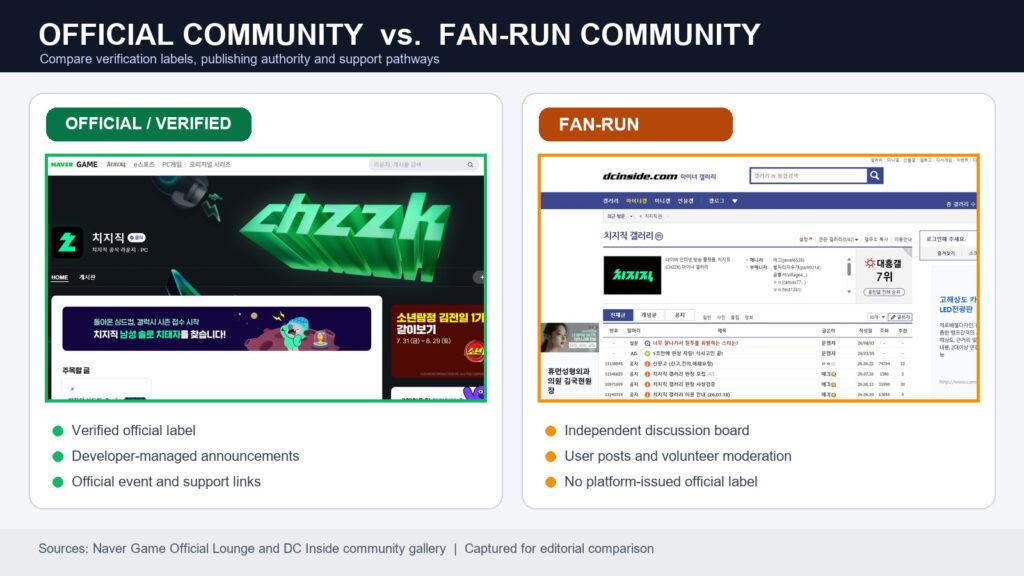
In Korea, Naver Cafe serves as the central nervous system for gaming communities and creator fanbases. To combat impersonation, Naver Corporation operates an official verification program. Naver awards a prominent green “Official Cafe” emblem (네이버 공식 카페 마크) exclusively to verified corporate entities, registered game publishers, and legally recognized public figures.
To receive this green badge, a company must submit official business registration documentation (사업자등록증) and prove trademark ownership to Naver’s administrative team. This green emblem appears permanently next to the cafe title on both mobile applications and desktop web headers. If a Naver Cafe lacks this green emblem, it is legally and operationally an independent fan community, regardless of whether it boasts ten members or five hundred thousand subscribers.
Naver Game Lounge and verified social portals
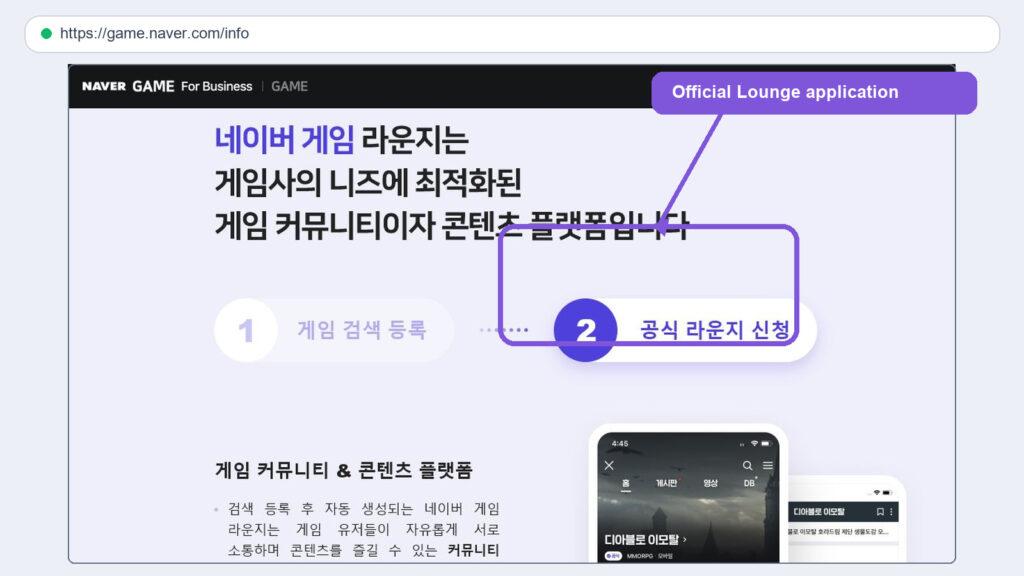
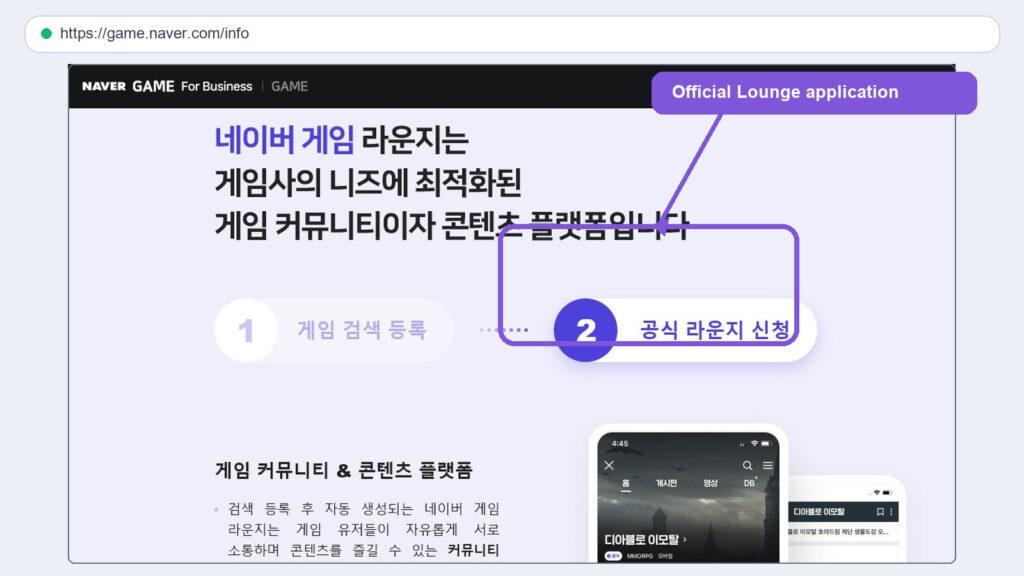
Major Korean game publishers, such as Nexon, Smilegate, and Kakao Games, increasingly utilize Naver Game Lounge (네이버 게임 라운지) as their primary portal. Naver Game Lounge integrates directly with developer database APIs, displaying a verified building or controller icon next to official developer posts.
Similarly, on global platforms like YouTube and Discord, official developer channels feature a verified checkmark or an official server badge. Crucially, these social channels will always be cross-linked directly from the developer’s primary corporate website footer.
Key differences in content tone, patch notes, and moderation rules
The nature of the published content, the tone of communication, and the structure of board moderation reveal the true operational identity of an online space.
Official patch notes and developer update schedules
Official communities exist primarily as authoritative communication channels. Their core output consists of structured game patch notes (패치노트), server maintenance downtime schedules (점검 안내), official event terms, and direct customer support links.
Content in these spaces is written in a neutral, professional, and corporate tone, usually posted by designated Community Managers (CMs) or Operation Teams. Posts routinely incorporate legal disclaimers, copyright notices, and formal company branding. Furthermore, when server bugs or billing issues occur, official communities serve as the only channel where company statements carry legal and operational accountability.
Fan art, rumors, and informal community moderation
Conversely, fan-run communities—such as DC Inside galleries (디시인사이드 갤러리), ArcaLive forums, or unofficial X (Twitter) fan accounts (덕질계정)—are driven entirely by user-generated content. The daily feed is dominated by fan illustrations, meme edits, gameplay clips, speculative lore theories, and unverified data-mined leaks.
Moderation in fan spaces is handled by volunteer community members rather than salaried corporate employees. While volunteer moderators work hard to keep discussions friendly, they lack access to internal developer databases. As a result, rules regarding misinformation, unverified rumors, and spoiler warnings are enforced casually and inconsistently.
Official vs fan-run communities: Key differences and safety risks
Understanding the practical operational differences between these two types of spaces helps you decide where to seek information and where to engage socially.
| Feature / Criteria | Official creator community | Fan-run community |
| Verification badge | Green Naver Official Cafe emblem / Verified tick | None (or unofficial fan-made banner) |
| Primary content | Formal patch notes, maintenance logs, verified events | Fan art, memes, speculative theories, unverified leaks |
| Publishing authority | Salaried Community Managers (CMs) & developers | Individual fans & volunteer community members |
| Moderation team | Salaried corporate staff following strict legal guidelines | Volunteer fan moderators with informal rules |
| Phishing & scam risk | 0% (All external links are corporately vetted) | Moderate to high (Risk of fake item coupon links) |
| Customer support | Direct integration with corporate helpdesk portals | None (Users can only ask other fans for advice) |
While fan-run forums provide lively environments for casual social interaction, relying on them for technical updates or account support carries inherent security risks. Phishing scammers frequently target fan forums by posting malicious links that mimic official coupon redemption pages to steal user login credentials.
3 steps to confirm if a community is officially endorsed before joining
To protect your personal data and ensure you receive accurate information, execute this simple three-step audit whenever you discover a new online group in Korea:
Step 1: Trace the link from the creator’s root domain
Never search for a community name blindly inside a search bar, as scammers frequently create fan cafes with names nearly identical to official titles. Always initiate your search from the creator’s root domain. Click the community link embedded directly on the game’s official corporate homepage, the developer’s verified launcher, or the streamer’s verified Chzzk or AfreecaTV channel banner.
Step 2: Audit the community footer and legal disclaimers
Navigate to the community’s “About” section or scroll to the bottom of the home page. An official community will explicitly list corporate registration details, including the company’s registered business number (사업자등록번호), representative name, and official terms of service. Fan-run communities either omit this information entirely or include a disclaimer stating: “This is an unofficial fan page not affiliated with the original creator.”
Step 3: Test external customer support and ticketing links
Locate the community’s “Customer Support,” “Bug Report,” or “1:1 Inquiry” button and examine the destination URL before clicking. In an official community, this link will seamlessly redirect you to a secure, encrypted corporate helpdesk domain (such as help.nexon.com or support.kakaogames.com). If the support link leads to an unverified Google Form, a personal email address, or an external messaging room, you are in an unofficial fan space.